Articles by Azu

WHAT SHALL WE DO ABOUT SOUTH AFRICA?
A Reply to Azu Ishiekwene
By Okoye Sunday
Approximately 1,030 words
-
September 24, 2026
- 3:22 pm
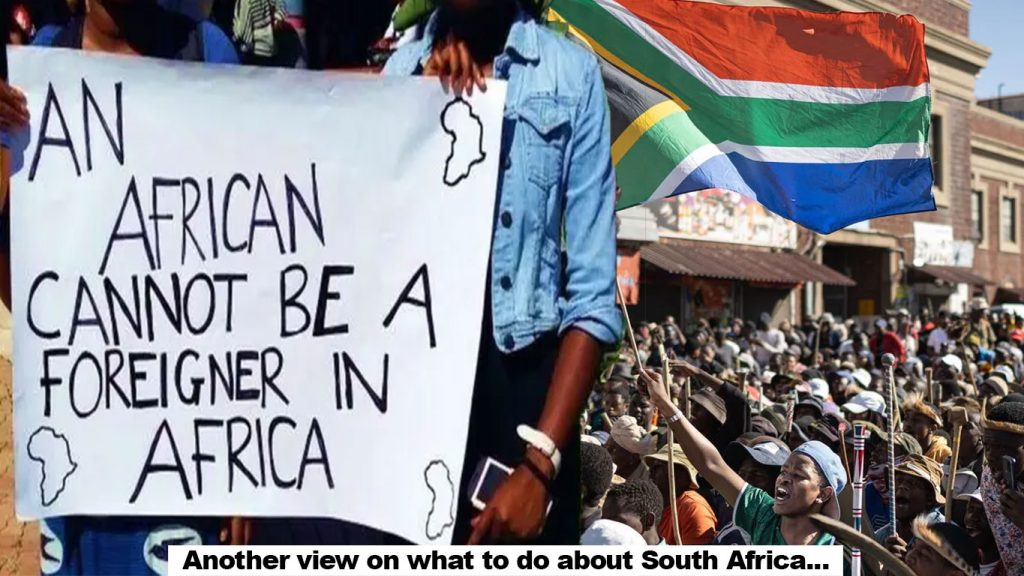
Azu Ishiekwene asks the right question, and he is right that the World Cup answered it before any of us did. The hostility Bafana Bafana met in those stadiums was not football. It was a bill arriving.
I take his question seriously and respectfully disagree with part of how it is framed, and I offer what I believe the answer is.
First, a figure worth handling carefully.
The piece reports eight verified deaths of Africans linked to xenophobic attacks since June 2026. The source appears to be the statement by Nigeria’s High Commissioner, Femi Fani-Kayode, that Bishop Taiwo Michael Fakunle and James Uchechukwu Nwankwo were the seventh and eighth Nigerians murdered in South Africa in 2026.
That is a different and larger claim: Nigerian deaths across a year, not African deaths since June. Fani-Kayode further states that more than 100 Nigerians have been killed in South Africa since 2022, over 30 of them allegedly by police or soldiers.
I raise this not to quibble. I raise it because South African officials read these pieces too, and a number that can be shown to be loose becomes the reason to dismiss everything around it. The deaths themselves are not in doubt.
Bishop Fakunle, 58, was shot at his home in Kensington, Johannesburg, on 4 September; the Nigerian Citizens Association reported two men forcing entry and firing more than seven times, with a murder docket opened at Jeppe Police Station.
Nwankwo, 48, died the next day, though accounts differ: our own Ministry of Foreign Affairs places his death in Somerset, Cape Town and attributes it to what it called gruesome interrogation techniques by South African police officers.
That divergence is where I think the piece’s framing needs to be revisited.
Ishiekwene writes of mobs roaming the streets. That is real. But if Nwankwo died in custody, then mobs are not the whole story, and treating them as the whole story is a kind of comfort.
A mob is a failure of policing. A death in custody is the state performing the violence itself, in a building, on a record, with a docket number. By the High Commissioner’s own count, more than thirty of the Nigerians killed since 2022 died at the hands of police or soldiers, and roughly half of those he counts for this year fall into the same category.
This matters for what we ask for. You cannot appeal to a state to protect people from the mob while that same state is holding the file on its own officers. Those require different remedies.
So, what shall we do about South Africa?
Not another statement. South Africa is not short of those, and this is the part I think Nigerian commentary consistently misses.
Its own High Court ruled in November 2025 that private citizens have no authority under section 41 of the Immigration Act to demand documents from anyone. It issued an interdict against a movement to blockade clinic gates. Its President wrote on 29 June 2026 that taking the law into one’s own hands is, in his words, vigilantism thinly disguised in the language of patriotism. The Zulu king appealed against attacks on foreign nationals, reversing the role his predecessor’s remarks played in 2015.
South Africa has seen this clearly and said so at the highest levels. What has failed is not perception. It is consequence.
Fani-Kayode’s sharpest complaint is not about the killings. Despite everything Nigeria has raised, nobody has been arrested, detained, prosecuted or brought to justice. Test that against the record. Ernesto Nhamuave was beaten, stabbed and burned alive at Ramaphosa settlement in May 2008; the photograph went around the world; no one was ever convicted.
Emmanuel Sithole was stabbed in Alexandra in 2015 while a photographer recorded every frame. Mido Macia was dragged behind a police van in Daveyton in 2013, and his officers were convicted, which is precisely why we remember his name as the exception.
Eighteen years, and the rule has not changed.
So, the answer to the question is narrower and harder than diplomacy usually permits. Stop asking for condemnations, which cost nothing and have been given freely for two decades. Ask for prosecutions, by name and by case number. Ask for the police deaths to go to an independent body rather than to the police. Ask South Africa to enforce section 38 of its own Immigration Act against the employers who hire undocumented workers, precisely because they cannot complain to anyone. This provision has sat unused since 2002. And ask it to clear an asylum backlog that manufactures the illegality being policed in the street.
Impunity is not a by-product of this violence. It is the mechanism. People who have watched two decades of killings produce almost no convictions have been taught something, and they have learned it.
Meanwhile, a fresh deadline has been set for 30 September.
One last thing, offered as a Nigerian to a Nigerian.
Framing this as South Africa against the continent lets the rest of us off far too lightly, and I suspect Ishiekwene knows it.
Nigeria expelled up to two million people in 1983, most of them Ghanaians, and we gave the suitcase a name we still use. Ghana expelled Nigerians in 1969 under the Aliens Compliance Order. Uganda expelled its Asian community in 1972 and spent the following decades asking them to come home.
The jeering in those stadiums was genuine. It was also a continent enjoying an occasion when the guilt belonged to someone else.
None of that excuses a single death in South Africa. It does mean the question is not what is wrong with South Africa. It is why every African state that has faced economic strain has reached for the same answer, and why none of us has ever found it to work.
That is the book I have been trying to write, and it is why I cannot write it as an indictment of one country.
Okoye Sunday is the author of Go Back to Your Country: The South African Dilemma, and The New Ubuntu: Africa, Migration and the Struggle to Belong
If you liked this article, please use the buttons below to share:
Facebook
Twitter
LinkedIn
WhatsApp
Email